Solid Quarter

Visit Trembling Pillow Press for poetry books, broadsides, chapbooks, and Solid Quarter Magazine.

Visit New Orleans Poetry Fest for the annual 4 day poetry festival directed by Bill Lavender and Megan Burns.

Megan Burns' Poeticsofbone&city project on Tumblr


Saturday, February 25, 2012

Readings: Nicole Peyrafitte and Pierre Joris

Nicole Peyrafitte and Pierre Joris read Thursday, February 23rd at the Gold Mine Saloon as part of the 17 Poets! Literary and Performance Series. 
It was a touching reunion of poet and place as last time both poets were here in New Orleans was in 2005 just months after the storm. Scheduled to read in late August '05 with our series, Nicole and Pierre  instead came in November of '05 to perform and to document and bear witness to the damage caused to the New Orleans community. Along with their son, Miles Joris-Peyrafitte (now an accomplished young film maker) they took to the decimated streets of New Orleans recording and photographing and most importantly talking to people about their experiences in post Katrina New Orleans. They traveled to the "white goods" dump far out in New Orleans east and spoke to workers and captured astonishing video of the mass destruction of a city's appliances. View video here
Their return to Louisiana marks a continuation of their dedication to interviewing, recording, and doing the work of the poet in the form of giving voice and bearing witness to the trauma in the world. They will be spending the rest of their trip traveling through southern Louisiana speaking to residents affected by the Gulf Oil Spill and BP's clean up efforts. Here in New Orleans they began this task by interviewing Buras activist Kindra Arnesen, mother and wife to a commercial fisherman who was one of the first to speak out about BP's insidious way of handling the spill and the community. Even in the wake of her family's sickness and need to be detoxed, including her two young children, she continues to fight and speak out about BP's blatant destruction of the coast, its waters and animals, and its communities. 
As I sat there watching Nicole and Pierre interview Kindra, I remembered the feeling of having someone listen and the urgency of the world outside of our sphere of residents and those affected to be privy to what we knew on the "inside" living as we were in the wake of destruction. This is what poetry does: it is the lifeline that continues to speak up long after the people who fight grow weary. It is the living document that roots itself into consciousness in the wake of seemingly endless lies fueled by corruption and greed. In the end, it thwarts silence and the death of what we seem to be screaming into the abyss. 


Nicole Peyrafitte performing excerpts from her Bi-Continental Chowder at 17 Poets!
This is going to be one hell of a text to engage with, hopefully sooner than later!

Nicole's humor shines through as she creates a sacred song in the long tradition of oral poets who sang the glories of the body and celebrated the mysteries of fertility and life. Peyrafitte creates a stage presence that travels from sandy shores to tramp about in Olson's words to refute Freud and then asks the audience to laugh, to poke fun at in the highest gesture of understanding: that we embrace and get comfortable in our skins, that we understand the deep mystery and the long history that we wade into when we use (& misuse) language. 
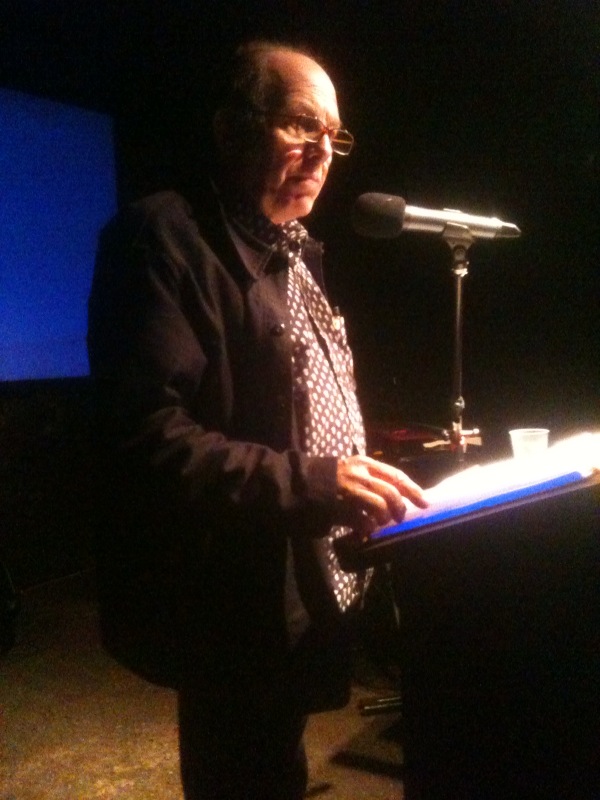
Pierre Joris' long poem weaving a line in the sand across continents and amid questions
from war to the inability to decipher the knowledge that is parceled out via the media
to the empathy sprung from embracing the language and the geography of the "other"
and the mirages we struggle against.


I've been deeply intrigued with a new collection of essays about Joris and his poetry and poetics ever since he put the book in my hand. Cartographies of the In-Between is a comprehensive examination of a life in letters from translator to poet to bridge between various schools of poetry emanating in a Nomadic poetics to anthologist and mentor. I've just finished the first section "Filiations" which includes an essay by Jennifer Moxley which takes a close look at Canto Diurno #1 as well as Joris' relationship with "hearth" and "home" in his poetry. I was moved to return his Canto Diurno in its entirety as I have it in his Selected Poems: Poasis. Instead of looking back at the patriarchal influences as this essay does, (and quite thoroughly), I find myself interested in looking forward to how this poem manifests itself in future poems: the idea of capturing a day of poetry as we see in later works like Bernadette Mayer's Midwinter Day or in an expanded length of time such as the experimental diaryesque prose of Lyn Heijinian's My Life. I wonder how we could trace forward a matrilineal line emerging from Joris' "shaking off the fathers." Franca Bellarsi has an informative essay drawing parallels as well as divergent paths in the works of the Beats, some translated by Joris, and Joris' own work and future poetics practice. Christopher Rizzo examines the use of culture in both Olson and Joris' poems ( and to some degree Duncan, as well)  and how Joris' poetics is influenced by, but in many ways not contained by Olson's declarations of projection and "page as field" poetics. Rizzo also examines how his role of translator informs his poetics reinforcing the view of the vernacular and language at any level as the "rhizomatic" force that enters the body and spreads out navigated by experience and place rather than by any steady teleological movement.  Dale Smith looks at Joris' book A Single Minded Bestiary: Common Fox using this text as a springboard to examine Joris' use of the totem animal, the function of translation and self in between countries, the influences of Dorn and Creeley, and Joris' role as a "social imaginary." This first section ends with an interview between Joris and editor Peter Cockelbergh which helps to clarify and ground some of the previous essays. In this form, we get to hear from the poet, some of his thoughts on lineage especially in regards to early influences as well as his emphasis on "breath" and how this informs his use of the term "rhizomatic" in terms of his poetics. 


Cartographies of the In-Between


Contributors:
Louis Armand, Tony Baker, Franca Bellarsi, Mohammed Bennis, Charles Bernstein, Nicole Brossard, Geert Buelens, Clive Bush, Corina Ciocarlie, Peter Cockelbergh, Clayton Eshleman, Allen Fisher, Christine Hume, Robert Kelly, Abdelwahab Meddeb, Jennifer Moxley, Carrie Noland, Alice Notley, Marjorie Perloff, Nicole Peyrafitte, Jean Portante, Christopher Rizzo, Jerome Rothenberg, Dale Smith, Habib Tengour.

About the editor:
Writer, scholar and translator, Peter Cockelbergh studied at the universities of Antwerp and Leuven (Belgium), at the EHESS in Paris, and is currently working on a Ph.D. at the Technische Universitat Darmstadt (Germany). For a number of years, he has been reading, writing on and translating Pierre Joris's poetry and essays (into Dutch, French & English), and has recently worked on the author's papers and archives. 

Saturday, February 18, 2012

Reading Danielle Vogel’s Narrative & Nest


Reading Danielle Vogel’s Narrative & Nest: Pre-Natal Architectures and Narrative Rituals


I read it in the bathtub. The children are away for the night and my husband is working. The dog sits on the mat next to the tub. The water is scented. I read it in the bathtub, submerged naked body –under waters cloudy.
I read every word from the first page, rights reserved, sculptures by, design and typesetting. I believe the voice talking to me from the page. I have to move from the pictures to the voice. I have to have something to hold on to. The voice as I imagine Danielle’s voice but also not Danielle’s voice as if she were talking to me disembodied as the voice is disembodied, as I am not hearing a sound, but it has the shape of sound. In my head, it has the curve of sound, it has the weight of safety, and it has the feel of a place I trust. I have the need to hear the voice tell me about writing, I have the need and maybe because I know nothing. Do I know nothing? What do I know?

“This is what happen when the book is not yet possible” (Vogel 2).

I hear the voice ask its own questions, did I have the questions or did the voice prepare me to have the questions. I’m thinking about tactile, about fingers, about the edge and the slip. I think about the past. I think about bones, why here it feels like muscles and tendons, like a slippery sinew but in my page, in my voice, it’s all bone. It’s hard. I think I don’t want to hear the voice, I think I don’t want to believe the voice; if the voice can’t be believed, if then... maybe there is too much water. I feel the anxiety of failing. Is it my failure or is language failing?

“that in trauma, the floor is pulled out from under the voice” (Vogel 6)

You think it’s not there, but it’s always there. And in this case, I am in and always in the water.

“the tight, but ductile gloss” (Vogel 7)

I don’t think of birds when I look at the pictures. I think of vomit. I think of something being forced out, the helplessness and the panic. I think of breasts full of milk, so full that the nipple emits a stream high into the air that peaks and then whimpers out. I think about bodies excreting babies and shit and I think about bodies being forced to take in, being filled. I think about openings and what exits and enters. But I don’t think about birds. I read about nests, the voice tells me about nests, about how they are built and sizes and distances. I don’t feel bird-like. I feel robbed of the language on the torn paper, as if they hold a clue, as if they bridge the space between the nest and the body littered with its holes, that can’t be shut up, that complicate…but I can’t piece them together, they’ve been torn out, they’ve been torn from me and then I can’t reach them. They just dangle there. I think about how they feel falling out. I think about pulling.

Pg  8 is a color photograph of a dozen empty vessels, their mouths are empty and ragged. Not smooth like a clay pitcher, they’re pinched like ripped paper, they’re popped open like aliens have emerged, they’re like balloons with the air leaked out and frozen at the moment when the latex bursts under the pressure. I think of wombs.
I put the book down on the seat next to the tub now. I look at those bare, naked vessels with their needy mouths and I think about wombs cut open to let babies out and then sewn back. I think about my body with its scars and how I say when I say I had a C-section, again, and again, and again, how I feel the need to justify it, how I feel somewhere what is that, like shame. But it makes no sense. The body does what it does, and the terrible love pulled out there, it’s complicated. The body eats and eats sorrow, it swallows love in days that flee from me. And then I put the book down because I can’t read anymore.

And then I think, as I’m crying, about the narrative of how I would write what is happening and then language is there to put the boat right, to pull the stopper and to step away. I am thinking about how the voice is narrating and how I am narrating and how this living voice at this moment is narrating its own thoughts and how I inhabit this stopped voice and the distance between us and about mud and clay and the shapes of letters. I think I have never looked for clay. I think I’ve spent many days as a child under bridges near canals. I remember the duck shit but never the nests.  

“Every nest, like the body and manuscript, has a problem it must move through: functionability “ (Vogel 16). I think about rituals, I’ve been thinking about ritual, public and communal rituals. Going to the river and writing an exquisite corpse and throwing it in the river in the vessel of an empty wine bottle. I thought about writing Danielle a letter, a private confession. But it felt like a trick, in the face of the honesty of the text, in the place of the vulnerability of the text. Where was I failing? Could I be there too?

“the contortion” (Vogel 19)


I get out of the tub after I finish the book and I take pictures of the rituals I have set for myself. To bathe, to rest, to drink hot tea, to be in the hour in language, like a sea you wave out on, who finds you and to where. I always feel like a fraud, like an interloper. I can’t stop coming to language but I think it’s laughing behind my back. I think I could fall better, maybe now in the thread of this, I can unclench.  It means something to me to be in the world with this voice, the voice that makes and takes the time to say these things. It means something to know that there are eyes and hands and bodies in the spaces here, near and far, and they are watching and thinking, dear keepers of the sacred spaces where we lie down and say: this is what I have to offer.


2/18/12


I’ve been investigating the book as an architecture of the body—and the body as an architecture for the book. This collection explores a manuscript, pre-completion. Each ceramic swallow-like nest, pod, and hive performs as a dwelling for excerpts from my manuscripts-in-progress. 
—Danielle Vogel

Order Danielle Vogel's Narrative & Nest


Poets at "The Mardi Gras": A retro"spectacle"


Poet Paul Chasse (who left us too soon) with wife Beth Chasse

Poets Jonathan Kline and Gina Ferrara


Poets Skip Fox and Christian Bök
How'd they get all those beads?

Another Gina Ferrara pic from a later year and Nancy Dixon

Tony Torn and Poet Lee Ann Brown


Poets Ed Sanders and Dave Brinks at Zulu hashing out their plan for coconut success

Poet Bill Myers 
Poet Bill Lavender


Happy Mardi Gras, Ya'll

Thursday, February 16, 2012

Poems via Post & Twitter

The wonderful editors over at Ugly Duckling Presse have sent me some beautiful new letterpress chapbooks including Lev Rubinstein's Thirty Five New Pages, Corina Copp's Pro Magenta and Michael Ford's Where We Expect to See You Soon.

Ugly Duckling Presse not only makes gorgeous chaps, but they have one of the sweetest sites for literary presses on the web. You should check it out, and they are now streaming podcasts of readings. In fact, I'm listening to one now as I type this, which isn't working out so well as I can't concentrate on the poems. I like the idea of poetry just streaming through the brain synapses.


Look for a review of Michael Ford's chapbook in the March Issue (issue 7) of 

Entrepôt. Michael Ford's second collection Olympia Street is available from Trembling Pillow Press. 

Also, Poet Carrie Murphy, a poet I only know through the medium of Twitter, and I are currently writing a collaborative poem via email to celebrate February poetry month. Carrie has a food blog over at Plums in the Icebox and you can follow her on Twitter where she is currently linking a poem a day until March 8th @carriemurph.

When we finish this little experiment, I'll post the fruits of our labors here.

Tonight at 17 Poets! Join us to celebrate the life and legacy of Eluard Burt with performances from Eric Burt, Dave Brinks, Felice Guimont, Cyril and Gayneille Neville, and many others. Show starts shortly after 8.

Wednesday, February 08, 2012

17 Poets! Upcoming Events


Upcoming Events At 17 Poets! Literary and Performance Series
Gold Mine Saloon, 701 Dauphine, New Orleans, LA 
Poetry in the French Quarter Since 2003
Every Thursday, 8PM
www.17poets.com


Poets Dave Brinks and Bill Lavender, Mardi Gras, 2008


February 9: Bill Lavender signs and reads from his new book Memory Wing 
(Black Widow Press, 2011)

Flautist Eluard Burt,  March 2006

February 16th: Musical Performances and Tributes to flautist and mentor Eluard Burt,
with readings and performances by Kichea Burt, Dave Brinks, Lee Meitzen Grue, 
Eric Burt, Cyril Neville, Gayneille Neville, and
more.  


 Nicole Peyrafitte, 2005


Pierre Joris, 2005


John Sinclair, 2006


February 23: John Sinclair performs with his Blues Scholars, Performance by
Albany poets Pierre Joris and Nicole Peyrafitte


March 1: Poet Rodger Kamenetz

March 8: Poets Arturo Pfister and Valentine Pierce

March 15th: NYC Poet Bill Zavatsky and  Dr. Jerry Ward, Jr.
March 22: TBA
March 29: Fiction Writer Moira Crone reads and signs her new book from 
UNO Press, The Not Yet

April 5: jazz beat poet ruth weiss

April 12: Bruce Andrews

April 19th: Baton Rouge Poet Chris Shipman reads and signs his new book
 along with poet Vincent Celluci

April 26: Maxine Cassin Tribute

More Dates Coming Soon. All features followed by the open mic. 

All images copyright 17 Poets! Literary and Performance Series and Megan Burns.

Monday, January 30, 2012

Poetry Readings, Rivers, & Memory's Passage

Dave and I will be reading tomorrow night over in Baton Rouge.

Details: River Writers presents poets DAVE BRINKS and MEGAN BURNS at 8pm on Tuesday January 31st at Boudreaux and Thibodeaux’s downtown Baton Rouge! Boudreaux & Thibodeaux's 214 3rd St # 2D, 8PM


In other news: 
17 Poets! Literary and Performance Series starts back up Feb. 9th with a reading and book signing by Bill Lavender from his new book Memory Wing (Black Widow Press).


www.17poets.com

We have a fantastic line up of poets coming to read this season at 17 Poets! Dave will be sending out the announcement for the season via our email list soon. If you want to join our list, you can go to our website and fill out the join our email list form. 


The next issue of Entrepôt, a double issue, will also be available Feb. 9 at 17 Poets!
as well as available online from tremblingpillowpress.com 
and at select book stores. 

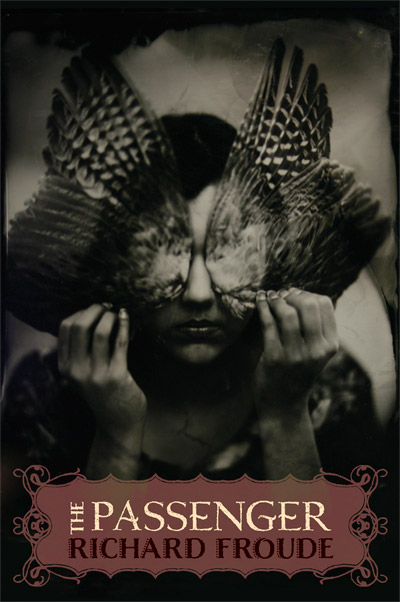
And here is my book recommendation of the day: Richard Froude's newest collection The Passenger from Skylight Press came in the mail. Not only does it have one of the best covers of 2012, but right in line with Froude's previous collection Fabric, this book weaves lines, words and time round and round into a skein of complex memories and remembrances, some yours, some Froude's. The title refers to you, and Froude is your guide taking you into the field of mathematical impossibilities and traipsing into the auras of those once inhabited by the likes of Prévert and Artaud. It's a fantastic journey: you will need to wing your eyes and hold on tight. 


Sunday, January 08, 2012

Review of Joel Dailey's Surprised by French Fries (Ugly Duckling)


This review was first published in the print monthly Entrepôt (Sept. 2011) published in New Orleans from Trembling Pillow Press. 


Surprised by French Fries by Joel Dailey
(Ugly Duckling Presse, 2011)  $10.00

500 Limited Edition
Letterpress and Hand Bound


With poems set on an Olympia typewriter (1971 edition), Joel Dailey delivers thirteen poems and one letter that bemuse, ridicule, and occasionally poignantly deliver returns on contemporary society and its popular preoccupations. Surprised by French Fries embodies a voice and a tone that subtly undercuts the everyday state of disaster that most of American is awash in by employing that age-old double punch of clever pun and wit to strip away the veil without leaving anyone uncomfortably abashed. Dailey’s balance in his repertoire allows the reader to feel as though they are part of the “club,” a group who not only can volley his political innuendo but who also are able to maneuver through Entertainment Weekly shout-out, “I know why Vince left Jen” and advertisement pitches “Extend your outdoor living space” (The 3:10 to Yuma). In the opening poem “What’s Wrong with Lou Dobbs? or Feel More at Home in the Islands With Instant Hawaiian,” Dailey delivers his characteristic rapid succession of hard hitting lines stacked up to carry (or push) you from image to image, from geographic point to metaphorical conclusion: a commercial, a phone message on your voicemail, Wall Street closing, an overheard conversation, the Internet, writing students. The whole poem turns on the making of poems and Dailey pulls the rug out, always having the last laugh: “Ladies & G’s, the next generation of foam,” Echoed in the last word is form, and rereading the poem the subject seems to align into an ars poetica  or perhaps it’s a nod to poethical wagers, in direct contrast to Wall Street and economic sustainability on the eve of America’s first 21st century depression.  

“The Ear Wax Removal System” promises personal hygiene as it mocks the nation’s favorite past time: “I’ve gone from Facebook to Assbook.” The poet assures us, “I’ve purchased the Ear Wax Removal System/ So I’d be sure to hear the Muse.” Again at first glance, these poems seem funny, self-deprecating even, but the underpinnings point to our seemingly nonchalant attitude of being inundated with information and technology. The removal system points directly to a much-needed national cleanse, one in which the poet can hear the Muses now being drowned out by promises of sex appeal and “sudden relief.” Some of Dailey’s poems read like code, if you can break the cipher, you win the prize. A poem like “4 Things All Guys Keep Private” has a title reminiscent of a ten thousand times rehashed Cosmo article, but Dailey does deliver 4 things and quite possibly solving this puzzle will finally put an end to gender disparity.

“30 Things to Put You in A Good Mood” is another one that will feel familiar, riffing as it does on society’s ever increasing need for easy steps to happiness and in collusion with the bite size portions that the media has trained us to fetch.  Couched in this poem are references to New Orleans political scandals, “Never take a bribe from a guy nicknamed ‘Pampy,’” in addition to language borrowed from the latest Victoria’s Secret catalogue. Normally, you would ask yourself what these things have in common, but Dailey’s stomping ground is surprise, the surprise of language, the quirkiness of contrast and juxtaposition and like all good poets, he turns language on its head in order to shock us out of our stasis so we can join him in: “anticipating (eagerly) the post consumer environment.”

Dailey assures us, “Whatever you’re used to      this ain’t it.” And that’s exactly why it works. 


Monday, December 05, 2011

175 Poets for 2011 or Unhand Me, Vendler (part 3: 112-175)

"No century in the evolution of poetry in English ever had 175 poets worth reading, so why are we being asked to sample so many poets of little or no lasting value?" -H. Vendler, reviewing Penguin's Anthology of Twentieth-Century American Poetry, ed. by Rita Dove


I've had to really dig into my piles of books and memory for the latter portion of this list, mostly poets still living and writing today. As before, this list is not ranked. It's a list of poets that I've read or heard this year that strike me as praiseworthy. Who knows what lasting value they will have, and who cares. I enjoy them and maybe you will too, in the here and now. I want to open with two anthologies that I enjoyed this year; two amazing collections filled with poetry, essays and personal testimonies. 


Thanks for playing. Crack a book, hit play, and go listen to some live poetry before 2011 escapes. 


112) Jennifer Bartlett, Sheila Black, and Michael Northen (editors), Beauty is a Verb: The New Poetry of Disability
113) Susan Deer Cloud, editor, I was Indian: An Anthology of Indigenous Poetry 
114) Paulette Swatrzfager, Years of Dust
115) Anselm Hollo, everything, (well, you should read everything...anyway)
116) Michael Ford, forthcoming from Ugly Duckling, Where We Expect to See you Soon
117) Dr. Jerry Ward, Jr.,  The Katrina Papers (probably the best book published about the Katrina and New Orleans)
118) Dennis Formento, Looking for an Out Place
119) Jim Gustafson, Virtue and Annihilation
120) Norman Shapiro, trans and ed. Preversities: A Jacques Prevert Sampler
121) Sunnylyn Thibodeaux, Palm to Pine
122) Michael Palmer, Thread
123) Theresa Hak Kyung Cha, Exilee/ Temps Morts: Selected Works
124) Ron Padgett, How Long
125) Ingeborg Bachmann, Darkness Spoke: The Collected Poems (I haven't read all of this, it's about 650 pages)
126) Bill Berkson, Darkness and Light
127) Bone Bouquet, Vol. 2, Issue 2 with contributors: Shira Dentz, Gina Myers, Eileen Myles, Deborah Poe and more, (whole issue, excellent)
128) Jim Brody, Fleeing Madly South (Dave said this is hard to find, read this, so I did. I had to return it immediately to the Brinks' archives or pay a fine)
129) Jeffrey Young, Ed. Birds & Beasts & Sea: Nature Poems from New Directions (Bernadette gifted this to us on our visit; it's pretty sweet. )
130) Al Young, ed. Something about the Blues (another fun anthology)
131) Lisa Pasold, Betting on the Horses
132) ruth weiss, Desert Journal
133) Unica Zurn, Dark Spring (I probably read this every year as I love Zurn)
134) Jackson MacLow, Thing of Beauty (This is a great collection of MacLow's work)
135) Ed Dorn, Gunslinger, (I'm including this as I listened to the recordings this year on Penn Sound: http://writing.upenn.edu/pennsound/x/Dorn.php)
136) Everette Maddox, I hope it's not over and good-by and Umpteen Ways of Looking of at a  Possum
137) Bob Cass, Special Edition Broadside in Entrepot, issues 3 &  4
138) Bob Kaufman, Ancient Rain
139) Hank Lazer, Days

Poets Heard this year:

140) Nicole Peyrafitte (via the phone speakers in Bernadette Mayer's living room)
141) Jimmy Ross (our indefatigable host at 17 Poets! Literary and Performance Series)
142) Kalamu Ya Salaam
143) Mark Folse
144) Kim Vodicka
145) Geoff Munsterman, editor-in-chief of Entrepot
146) Michael Ruby
147) Phil Johnson
148) Kataalyst Alcindor
149) Lenny Emmanuel
150) Vincent Farnworth
151) Gwendolyn Albert
152) Felice Guimont
153) Herbert Kearney, forthcoming chapbook from Trembling Pillow Press, Water Speak
154) Nanette Morin
155) James Nola, Higher Ground, (not poetry, but he is a poet and this latest novel is another great post-K New Orleans book)
156) Sam Jasper
157) Dario Suchkova
158) Kelly Clayton
159) Ange Mlinko (Penn Sound recordings on Bernadette Mayer: http://writing.upenn.edu/pennsound/x/Mlinko.php

160) Jean-Mark Sens

161) Kathryn Schaeppi, Video of Dusie reading c/o Deborah Poe: http://www.youtube.com/watch?v=vGMah7udK10&feature=related

162) Jonathan Kline

163) Jamba Dunn, American Dust on Ubuweb: http://www.ubu.com/ubu/unpub/Unpub_011_Dunn_American.pdf

164) Vanessa Place, Statements of Facts, Ubuweb: http://www.ubu.com/ubu/unpub/Unpub_042_Place.pdf

165) Vincent Katz, Shopping for Oliver's Chil, Ubuweb: http://www.ubu.com/ubu/unpub/Unpub_041_Katz.pdf

166) Sunday Shae Parker

167) Patrice Melnick, director of Festival of Words in Grand Coteau, LA
168) Janine Pommy Vega: http://www.youtube.com/watch?v=wiEuNVasZk4

video break brought to you by Deborah Poe. Please watch this before we complete our list: http://www.youtube.com/watch?v=84UuV0ZhuIk&feature=relmfu

I'm going to end with some books that I want to read and/ or finish reading before the year turns over:

169) Joseph Lease, Testify (reading this right now, and it's wonderful)

170) Carrie Hunter, The Incompossible
171) Kate Schapira, The Bounty, Four Addresses and How We Saved the City
172) Renee Gladman, Event Factory and The Activist
173) Sommer Browning, Either Way I'm Celebrating
174) Joshua Edwards, Campeche
175) Arielle Guy, Three Geographies


And 'tis the season

Video via UBUWEB:
William Burrough's The Junky's Christmas (1993) 
http://www.ubu.com/film/burroughs_xmas.html


Sunday, December 04, 2011

175 Poets for Pleasure or Vendler's Constraint (Part two, 59-111)

"No century in the evolution of poetry in English ever had 175 poets worth reading, so why are we being asked to sample so many poets of little or no lasting value?" -H. Vendler, reviewing Penguin's Anthology of Twentieth-Century American Poetry, ed. by Rita Dove


Continuation of my 175 poets and editors of poetry from books/ chapbooks I've read this year or last. The list is not ranked, it's in the order that I think/ remember what I've read. I've tried to stick to living poets who I've read this year, with only slight fudging when necessary.  I thought listing books was getting too boring, so I've included some variations as well. Thanks for playing.


Hope some people enjoy the list and add some new names and titles to their rotation.


59) Penelope Rosemont, (ed) Surrealist Women: An International Anthology
60) Thaddeus Conti, Listen Loud, Listen Long
62) Chris Pusateri, Molecularity
63) Michelle Naka Pierce, Symptom of Color
64) j/j hastain and Marthe Reed, Lafayette a Lafayette
65) Sara Rosenthal, The Animal
66) John Pluecker, Undone and Routes into Texas
67) Michalle Gould, 100 Untitled Works in Mill Aluminum and 15 Untitled Works in Concrete
68) Sara Mangold, An Antenna Called the Body
69) Dawn Pendergast, Leaves Fall Leaves
70) Johannes Goransson, entrance to a colonial pageant in which we are all beginning to intricate
71) Mary Ann Caws and Nancy Kline, trans  Furor & Mystery and Other Poems by Rene Char
72) Marilyn Kallet, trans. The Big Game by Benjamin Peret
73) Andrei Codrescu, Whatever Gets You Through the Night, (OK, it's not poetry, but he is a poet and this is a kick ass book.)
74) Julie Carr, 100 Notes on Violence
75) Jonathan Cott, Dylan on Dylan (Not poetry, but by a poet about someone often referred to as a poet.)
76) Sandra Simonds, I've Lived in So Many Apartments
77) Jennifer Dick, Tracery
78) Susan Lewis, Some Assembly Required
79) Julia Cohen and Brandon Shimoda, Samaritan
80) Kristen Sanders, Orthorexia
81) Sarah J. Sloat, Excuse Me While I Wring this long swim out of my hair
82) Inger Christenson, It, Alphabet and Light, Grass and Letter in April 
83) Laura Mullen, Dark Archive
84) Robert Duncan, The H.D. Book, (ok, they are both dead, but the book was just published and it's a must read)


This part of the list constitutes books read in 2010 that still stand out to me:
85) Allison Cobb, Green-Wood ( I would really like to see another Cobb book in 2012)
86) David Rowe, Unsolicited Poems
87) Karen Weiser, To Light Out
88) Christine Hume, SHOT
89) Ruxandra Cesereanu, Crusader Woman
90) Brenda Hillman, Practical Water
91) Moose Jackson, Loup Garou
92) Cynthia Hogue, When the Water Came


Poetics: 
93) Pierre Joris, Justifying the Margins


Online or Print Journals,
94) Megan Levad, from You are Where you Live (Fence, fall 2011)
95) Tyler Flynn Dorholt, from Nightmare Directed by Ingmar Bergman, (Horseless Review 8)
96) Rachel Marston, The Signal for Instant Action, (Diagram, 11.1)
97) Cara Benson, [The first man...] from Summer Stock, 5


This part of the list is made up of poets that I've heard read this year, and for various reasons have not read a book of theirs this year, but who still deserve mentioning:


98) Brenda Coultas (Brenda, please, you're killing me, I need another Coultas book STAT)
99) Tracey McTague (long overdue for a collection in my opinion)
100) Jen Tynes (reading from an exquisite long poem that will be a book soon, I hope)
101) Gina Ferrara 
102) Mona Lisa Saloy
103) Quess
104) Simon Pettet
105) Bill Zavatsky
106) Lewis Warsh
107) Shafer Hall
108) Kelly Harris
109) Andrea Boll
110) Rodger Kamenetz
111) Brendan Lorber (who probably deserves his own category as I've heard him read poetry both in person this year and on his acculorber reports, which are their own poetry, so he would be under poets I've heard via video stream)


Saturday, December 03, 2011

Poets Worth Reading: 175 in 2011, Part One (1-58)


"No century in the evolution of poetry in English ever had 175 poets worth reading, so why are we being asked to sample so many poets of little or no lasting value?" -H. Vendler, reviewing Penguin's Anthology of Twentieth-Century American Poetry, ed. by Rita Dove

Since I apparently read way too many poets not worth reading according to Vendler, I thought I would further the torment by sharing all the wonderful books and poets that I have read in the last year. It didn't even take me a century to read 175 interesting poets, so you can probably dismiss this list entirely if you agree with the above statement.

I'll start with what I've read most recently and branch out including only living poets writing in this decade, in a further effort to point out the viability and importance of poetry being written NOW. I read a lot of dead poets too, so don't worry Vendler. I even cracked the Cantos again this year. I'm sure reading Mina Loy's short stories and plays makes that last gesture null and void in Vendler's eyes, but what can you do? I also may have published and/ or may be married to poets mentioned, but unless anyone becomes a millionaire or exceedingly famous from this list, who cares?

If you're not on this list, either I didn't read you this year or I've never read you and you can remedy that by sending me a book that I may or may not read next year.

Let's play:

1) Ed Sanders, Fug You
While not a book of poetry, it outlines Sanders' long commitment to poetry and revolution, and since I learned most of what I know about the 60s and all of what I know about investigative poetics from Sanders' verse, he gets top spot.

2) Bernadette Mayer, Ethics of Sleep and Studying Hunger Journals
It's a good year when you get two Mayer's to challenge and thwart your knowledge and understanding of the written word.

3) Alice Notley, Culture of One and Reason and Other Women
Reason is an older book, but I love the complicated narrative and read it often this year.

4) Anne Waldman, Soldatesque/ Soldiering with Dreams of Wartime (with Noah Saterstrom)
Waldman continues to plunge into the depths of political inquiry and social justice accompanied with beautiful half page images scrolling across the top of the book's pages.

5) Jack Collom Second Nature (unpublished) This is an as yet uncollected manuscript of Collom's life long commitment to nature and poetry; invaluable, experimental and, of course, humorous.

6) Bill Lavender Memory Wing
Poetic memoir trumping through life and the afterlife, new from Black Widow Press

7) Philip Good, Untitled Writings from a Member of the Blank Generation
Long awaited first collection from a poet long on the scene of poetry happenings over the last several decades

8) rob mclennan, C
Small chunks of syllabic beauty caught in the sparse form and space of this chapbook.

9) Deborah Poe, Elements
Examining the invisible architecture of the world through the lens of association and inference

10) Claire Hero, Sing, Mongrel
Strange, bestial, and hard to look away from--

I'm going to stop commenting on the books only because I will start repeating myself, if it's on the list, I'm saying it's worth reading:

11) Bei Dao, Endure (trans. by Clayton Eshleman and Lucas Klein)

12) Jennifer Denrow, California


13) Alison Pelegrin, Hurricane Party


14) Jenny Bouly, Not Merely Because of the Unknown Stalking Toward Them 


15) HR Hegnauer, Sir

16) Jen Hofer,  slide rule and one


17) Susana Gardner, Herso, An Heirship in Waves


18) Dara Wier, A Civilian's Journal of the War Years


19) Sergio Medeiros, Vegetal Sex (trans by Raymond Bianchi)

20) Niyi Osundare, City Without People


21) Mairead Byrne, Lucky


22) Jimmy Lo, A Reduction


23) Dave Brinks, (forthcoming) The Secret Brain: Collected Poems

24) John Sinclair Song of Praise Homage to John Coltrane 


25) Lee Meitzen Grue, DOWNTOWN


26) Danielle Pafunda, Iatrogenic, Their Testimonies


27) Laynie Browne, Roseate Points of Light


28) Kate Eichhorn, Fieldnotes, a forensics


29) Richard Froude, Fabric


30) Eileen Myles, Sappho's Boat: Poems and Pencil Poems (OK, Sappho's Boat is an older book (and I also read Inferno: A Poet's Novel), but it's a great book that I reread this year)

31)Annie Finch, Among the Goddesses


32) Elizabeth Willis, Address


33) Jamey Jones, Blue Rain Morning


34) Joel Dailey, Surprised by French Fries


35) Travis Cebula, Jamaica


36) Julie Kane, Jazz Funeral


37) Daniele Vogel, lit


38) Brad Richard, Motion Studies

39) Arielle Greenberg and Rachel Zucker, Home/ Birth


40) Kim Rosenfield, Trama


41) Camille Dungy, ed. Black Nature


42) Anne Tardo, The Dik Dik's Solitude

43) Joan Retallack, Procedural Elegies/ Western Civ Cont'd


44) Dodie Bellamy, The Buddhist


45) Susan Howe, That This


46) Carmen Gimenez Smith, Can We Talk Here

47) Cecilia Vicuna, beforehand


48) Benjamin Morris, Coronary


49) Brett Evans, Pisa Can


50) Brenda Iijima, If Not Metaphoric


51) Peter Gizzi, Threshold Songs


52) Julia Cohen, The History of a Lake Never Drowns


53) Emma Bolden, The Sad Epistles


54) Daniel Kerwick, Attach It To The Earth


55) Kirsten Jorgenson, Deseret


56) Brooklyn Copeland, Laked, Fielded, Blanked


57) Nathan Hauke, SEWN


58) Darrell Bourque, In Ordinary Light

Sunday, November 13, 2011

Poetic Space


I've been reading Gaston Bachelard's the Poetics of Space. It's interesting; I find I'll totally blank out while reading huge chunks and then suddenly something will come into focus. Does everyone read like this sometimes, I wonder?

Here's some bits I jotted down:

"To read poetry is essentially to daydream."

"Space is everything."

"Was the room a large one? Was the garret cluttered up? Was the nook warm? How was it lighted? How, too, in these fragments of space, did the human being achieve silence?"

"When two strange images meet, two images that are the work of two poets pursuing separate dreams, they apparently strengthen each other."

"slow sonorities"

"dream upon their name"

And some things that came up around the text: a remedy of words, value of intimacy/ scattered/ where they feel along the wall/ in darkness/ remains

I guess, too, a product of its time (?) as "they" say, there is a huge chunk of text that romanticizes the woman's place in the house, pointing out that her attention to dusting and waxing the furniture is akin to communing with angels. I often feel this way myself when doing housework; I really look forward to my angelic face poised over a sink full of dirty dishes and some time for me to compose a beatific picture of domestic happiness over the frothiness of caked on grime while visions of sugar plums dance through my mostly empty head. *Sigh*


For further reading: Frances Yates, The Art of Memory


I'm  a huge Wilkie Collins fan and intrigued by this book.


Elizabeth Robinson's Three Novels

Check out the review over at Jacket:

http://jacket2.org/reviews/point-contact-they-create