Solid Quarter

Visit Trembling Pillow Press for poetry books, broadsides, chapbooks, and Solid Quarter Magazine.

Visit New Orleans Poetry Fest for the annual 4 day poetry festival directed by Bill Lavender and Megan Burns.

Megan Burns' Poeticsofbone&city project on Tumblr


Showing posts with label Black Widow Press. Show all posts

Tuesday, November 06, 2012

Dave Brinks' The Secret Brain (Black Widow Press)


This Thursday at the Gold Mine Saloon
(701 Dauphine St., New Orleans, LA)
celebrate the release of poet Dave Brinks' 
Introduction by Andrei Codrescu
320 pages

Show begins 8:30 PM


Part of 17 Poets! Literary and Performance Series

Wednesday, March 28, 2012

Poetry Month Events in NOLA: It's almost OUR month

You know I love a whole month in which the rest of the world thinks about poetry.

This Thursday, 17 Poets! welcomes poet, artist, and teacher Sunday Shae Parker to the stage with a multimedia performance, 8 PM. www.17poets.com

April brings a whirlwind of ruth weiss events as she returns to New Orleans for the first time in 61 years.

Her book DESERT JOURNAL is just out from Trembling Pillow Press.

ruth weiss events:

Tuesday, April 3, 7:15PM: The Black Widow Salon at Crescent City Books
For info. and to RSVP as seating is limited, email: books@crescentcitybooks.com

Wednesday, April 4th, 7:30PM: Zeitgeist Multi-Disciplinary Arts Center presents rare screenings of filmmaker ruth weiss' work including "The Brink" a 40 minute film that Stan Brakhage called "one of the most important San Francisco films of the period."  visit: zetgeistinc.net

Thursday, April 5th, 8PM at 17 Poets! Literary and Performance Series:  ruth weiss reads and signs DESERT JOURNAL with the POET OF NEW ORLEANS BRASS BAND featuring Joe Zeno, Sr. on tuba; Christopher Davis, trumpet; Chad Moore, clarinet; Mark Francis, trombone; and Clyde CM3 on drums with special guest Hal Davis on on-da-log


from the latest issue of Entrepôt (issue 7) 


April 10th head over to Octavia Books to hear Lee Meitzen Grue read from DOWNTOWN (Trembling Pillow Press)  and Niyi Osundare read from City Without People (Black Widow press), 6pm.  (Osundare's poem "Raindrum" was recently selected by the US Olympics committee to represent his native Nigeria in the winter olympics. )


If you're in Baton Rouge, head over to the River Writers Reading Series at Boudreaux's to hear New Orleans poets Bill Lavender, reading from Memory Wing (Black Widow Press) and Geoff Munsterman, editor of Entrepôt. Tuesday, April 10th, 8PM

April 12, 8PM 17 Poets! Literary and Performance Series welcomes poet Bruce Andrews as well as poet and OffBeat writer Alex Rawls


April 19th: Baton Rouge Poets Christopher Shipman and Vincent Cellucci (hosts of the River Writers Series) read and sign books along with Portland poet Allison Cobb, 8PM


Cover by Tracey McTague


April 20th: New Orleans Museum of Art features a panel and reading hosted by Susan Larson with poets Megan Burns and Gina Ferrara and artist Tricia Vitrano as part of their Friday Night Events, 5:30-7:30

Can't be in New Orleans 'cause you in Lafayette: no problem, cher!
On Saturday, April 21st, at 7 p.m., CARPE DIEM! GELATO-ESPRESSO BAR invites the public to spend a spring evening experiencing poetry and performance art while enjoying gelato, espresso, tea, and pastries when it hosts "VOICES IN SPRING: Poetry by Marthe Reed and Performance by Bonny McDonald"

April 26th: Book Signing and Reading by Moira Crone of her new novel, The Not Yet (UNO press)

Saturday, March 03, 2012

Review of Niyi Osundare's City Without People


Review:  Niyi Osundare's City Without People (Black Widow Press, 2011)

Note: This review was originally published in Entrepôt (Vol. 2, Oct 2011).

Dr. Niyi Osundare will be the featured reader Tuesday, March 6, 2012 at the 1718 Series held at the Columns Hotel. The series begins rather promptly at 7 and is usually SRO, so get there early for a seat. The readings are usually followed by a Q & A with the author.

http://1718aneworleansreadingseries.blogspot.com/


(Black Widow press, 2011) 137 Pgs.
Reviewed by Megan Burns

Niyi Osundare’s City Without People: The Katrina Poems is a narrative journey from the first moments that the water breached the levees to the traumatic experience of the author and his wife trapped in their attic to the slow journey back to some sense of normalcy.  Instead of a straight shot chronologically though, these poems vacillate from the first terrible hours followed by the one year anniversary and then back to earlier experiences. In this way, they capture the way memory holds a seemingly endless amount of hours and experiences in a brief recollected interlude. This movement in time as well reflects the book’s attempt to capture the ebb and flow of fear and anger as well as passion and hope in the years following Katrina.  These poems then are arranged strongly around the tone and the emotion expressed in each section. It allows the poet to not only examine the various reactions to this event, but it also plumbs the depths of the poet’s personal experience as survivor, evacuee, displaced professor, New Orleans citizen, and as part of a Nigerian community in New Orleans that is displaced after the storm. Osundare’s Nigerian background and cultural milieu allow him the opportunity to translate this event through his African heritage. In cultural signals and codes, Osundare brings his own particular blend of Nigerian influence to this historical New Orleans event. It’s this blending of cultures, this looking back to the familiar in the midst of chaos, that brings such a unique voice to this topic. In addition, Osundare’s ability to range from anger to quiet desperation amid heartbreaking images and then soar back to such heights of optimism and resilience makes this book one of the most important books to emerge from the Katrina debacle. Unlike earlier books, this collection benefits from the author’s deliberate need to process and collect his thoughts and responses. The reader receives not one overwhelming sense of raw or heated emotions, but instead passes through the ever-changing sense of response and recovery that takes years to really name and comprehend.


     The initial section to this collection “WATER,    WATER!...” opens with the subtle line, “It all began as a whisper among/ The leaves.” The poem titled “The Lake Came to My House” is just the beginning of several difficult poems in this section that recount the disastrous damage that the water inflicted upon the city of New Orleans. The poem ends with the same subtle tone that belies the vast trauma embedded within the lines: “The day the Lake came down my street/ And took my house away.” Osundare easily moves from narrative lyrics to stark lines that have imagistic overtones and then to more formally rhymed and metered lines. His penchant for song is evident in poems like “Katrina Anthem” which begins “Ka ka Katrina” and then continues out in quatrains composed of rhymed couplets beating out a rhythm as tense and pitched as the misery and distress that forms the subject:
                       
Blood on your hands, skulls in your fridge
                        You swamp the river and swallow the bridge
                        In your crowded kitchen a foul fleshfeast
                        Fit for the monster and the hellish beast


In stark contrast to this melodic, albeit dark poem, is the poem that is the title piece for the book, “City Without People.” Here Osundare delivers a straight punch, no rhyme or song, but instead the bleak report from the voice of the witness: “The trees are dead/ The birds are gone/The grass is scorched” and later, the questions: “Tell me/ What do you call a house/ Without walls?” One of the powerful aspects of this book is Osundare’s ability to return again and again in various forms and tones to this subject. In one poem where the reader finds despair; there will be another that sings of rebirth. It’s an inconstancy that perfectly reflects the chaotic nature of responding and surviving a catastrophe. In the midst of resilience, the author finds himself angry and distraught and then in the next moment, “the sexy serenade of the sax-o-phone” rises breathing new hope into the lines.


Osundare’s poems as well cover vast topics brought about by the disaster from the negative response of outsiders who loudly criticized the city’s rebuilding to the “Katrina refugee” moniker to the disaster tours that descended into destroyed neighborhoods for tourists; this book in a sense becomes a catalogue, a reminder of not only the city’s event but the fallout from that event and how the nation responded.  As the unacknowledged legislator, Osundare pokes fun of these notions while also cutting to the quick of the issue. In “Disastourism” he warns: “Careful now,/ Dear Tourist/ Mind the bristling bones/ Beneath your sole.” In other words, take care where you walk for in these empty hulls are the souls of a city, and what does it say of your own heart to drive by in a bus pointing a camera at this destruction.  Osundare points out that to uncap the lens of our own view would mean accepting that this could have been prevented and that any region protected by levees could be another “New Orleans” story.


The book ends with a poignant interview between Niyi Osundare and Rebecca Antoine, which was collected in Antoine’s Voices Rising II: More Stories from the Katrina Narrative Project. It’s incredible after reading these poems, which attempt to encapsulate a series of swirling emotions and responses to disaster, to read this interview that clearly recounts Osunadare’s experience from the moment the levees broke to the point where he returns to New Orleans almost a year later. People from poems in the book acquire new depths as Osundare relates with wonder and appreciation all of the people who helped him and his family not only survive their harrowing entrapment in their flooded house but who continued to help them long after the water had receded and the city had become a fading news story. Osundare opens up a world interconnected by scholars and university colleagues who came to his aid as well as Nigerian community members and friends both here in America and in Africa who helped support him and his family at this time. Osudare’s ties to Nigeria and to the country of his childhood are largely represented in this book that talks of his new home. In song and in references, in the call and response and in the chant, there are, in the bones of these poems, beliefs in homes that span oceans and in communities not bound by geography. From the preface, Osundare says, “I sing of a city which insists on its own right to life, liberty, and the pursuit of happiness.”  This is a book about people: People filled with the need to raise their voices against the silence.  

Monday, January 30, 2012

Poetry Readings, Rivers, & Memory's Passage

Dave and I will be reading tomorrow night over in Baton Rouge.

Details: River Writers presents poets DAVE BRINKS and MEGAN BURNS at 8pm on Tuesday January 31st at Boudreaux and Thibodeaux’s downtown Baton Rouge! Boudreaux & Thibodeaux's 214 3rd St # 2D, 8PM


In other news: 
17 Poets! Literary and Performance Series starts back up Feb. 9th with a reading and book signing by Bill Lavender from his new book Memory Wing (Black Widow Press).


www.17poets.com

We have a fantastic line up of poets coming to read this season at 17 Poets! Dave will be sending out the announcement for the season via our email list soon. If you want to join our list, you can go to our website and fill out the join our email list form. 


The next issue of Entrepôt, a double issue, will also be available Feb. 9 at 17 Poets!
as well as available online from tremblingpillowpress.com 
and at select book stores. 

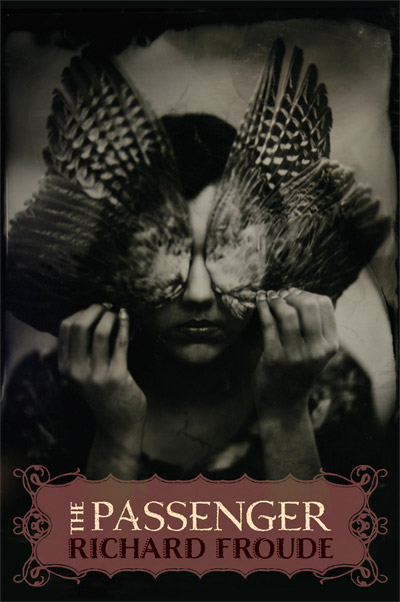
And here is my book recommendation of the day: Richard Froude's newest collection The Passenger from Skylight Press came in the mail. Not only does it have one of the best covers of 2012, but right in line with Froude's previous collection Fabric, this book weaves lines, words and time round and round into a skein of complex memories and remembrances, some yours, some Froude's. The title refers to you, and Froude is your guide taking you into the field of mathematical impossibilities and traipsing into the auras of those once inhabited by the likes of Prévert and Artaud. It's a fantastic journey: you will need to wing your eyes and hold on tight. 


Friday, November 11, 2011

Black Widow Salon at Crescent City Books


This Monday marks the return of Crescent City Books' Black Widow Salon hosted by Michael Zell. At 7:00 PM, join poet, publisher and author of the newly released Memory Wing, Bill Lavender
as he reads from and discusses this work. 

The Black Widow Salon, sponsored by Joe Phillips and Susan Wood of Black Widow Press and hosted by Michael Allen Zell, is a monthly Monday event, existing to dig deeper into the literary arts.  November 14th: Bill Lavender.  December 5th: Josephine Sacabo.  Crescent City Books at 230 Chartres St. from 7-9 p.m.  Seating is limited.  RSVP’s preferred.  More information at crescentcitybooks.com


Memory Wing by Bill Lavender

A memoir in verse that explores the outer reaches of truth: of memory, language and art. Loosely based on the tripartite structure of The Divine Comedy, this poem appears as a simple memoir in lyrical and immediately accessible language, yet it works by accumulation to question the very fact of memory and the foundations of truth and identity. This is a poem that reads as easily as a memoir but which is as dense with allusion as one of The Cantos. As Andrei Codrescu has said of it: "This is a grand American long poem Doc Williams would be proud of."

Advance comments on Memory Wing:
Delving with brilliant image precision into the power of the past, and chanting in plain lyric to the ghosts of his mother and father & the futurity of his sons, Bill Lavender takes us back, down, deep into a psychological Arkansas and New Orleans that resonate with Dante's three part journey. In the vast field of felt memory, he guides us into subtle territories of torment, recognition and reconciliation that are Lavender's contemporary equivalents of Dante's inferno, purgatory and paradise. Bill Lavender's Memory Wing is a contemporary autobiographical masterpiece.
-Rodger Kamenetz

The poet's mother lives, dies in an Alzheimer's wing. The poet takes wing, remembering more because his mother remembers so little. He takes his past-and some of hers-under his wing. There is no waiting in the wings here; everything's laid out on memory's stage, surreal as the Roman memory exercises ordained. The poet may be left wing, but he steps out from under the wing of Arkansas, Blake-like tragedy, and Dante, into the elegiac present, where parents cede to children and in all their dreams come responsibilities and their evasions. The OED's 12th definition best defines wing as "part of a spectral line where the intensity tails off to nothing at either side of it," but that fails to describe the utter intensity of the flight between points in Lavender's book. This non-fiction epic poem flies through past, present, and hallucinated futures at the speed of unpunctuated sound.
-Susan M. Schultz

What a grand concerto! Read this epic eulogy and weep! Lavender is a resplendent Virgil traversing the woods of his memory, which coincides at unexpected places with our own. I'm happy to see the terse minimal suitcase of his lyrical self unpacked and overflowing. This is a grand American long poem Doc Williams would be proud of.
-Andrei Codrescu

Bill Lavender shifts language in rare combinations that unsettle the reader. Memory Wing is no different except that it takes a lifetime to inhabit, but lets us dip into that proper distance between knowing and learning where we hold down our own memories for comparison and where we sit in the same tragedy and splendor….
-Megan Burns

Bill Lavender is a poet, editor, and teacher living in New Orleans. He is the publisher of Lavender Ink, a small press devoted to contemporary poetry, and he is Managing Editor of UNO Press at the University of New Orleans. Besides his dozen books published to date his poems have appeared in numerous print and web journals and anthologies, and his essays and theoretical writings have been published in Contemporary Literature andPoetics Today, among many others.


Coming in November 2011
ISBN13: 978-0-9837079-0-5
219 pages $19.95

Friday, September 16, 2011

Reviews, Chapbooks, Readings, and Book Prizes


My review of Kate Eichhorn's Fieldnotes, a forensic is in the new issue of Rain Taxi (Fall 2011).

I've been ecstatic about receiving in packages of two or three a day a collection of Dusie Kollective Chaps. The author's have been so generous, and I love their notes as much as I do their willingness to share their chapbooks with me. I'm having to collect all the notes, chaps and envelopes together, so I can keep them as I discovered them from the mailbox.


Black Widow press has just released Niyi Osundare's City Without People, and I have been reading and rereading it for an upcoming review in October's issue of Entrepôt.


We also had a wonderful reading by Louisiana Poet Laureate Julie Kane last night at 17 Poets! She read a beautiful crown of sonnets (sonnet corona) for artist and coffee shop owner Bob Borsodi. He was quite a remarkable person, and Nathaniel Turner has a wonderful collection of tributes to him here.  


Trembling Pillow Press has just opened its first Bob Kaufman Book Prize in poetry. Submissions are open now through Nov. 15th with judge poet Bernadette Mayer. You can find out more and enter here. 


Wednesday, December 15, 2010

Julian and Laura Semilian at 17 Poets! Thursday, Dec. 16

Thursday, December 16 at 7:30


17 Poets! Literary & Performance Series presents an outstanding double-bill featuring JULIAN SEMILIAN and LAURA SEMILIAN.

Our features will be followed by Open Mic hosted by Jimmy Ross.


JULIAN and LAURA SEMILIAN
Julian Semilian is a Romanian Poet, Film maker, novelist, and accomplished translator. His writings have appeared in journals and anthologies around the world. Recent translations include: Nostalgia by Mircea Cartarescu, Paul Celan's Romanian Poems, and many translations within the comprehensive: Born in Utopia, Anthology of Romanian Literature. With his wife Laura Semilian they have translated Max Bleecher's Scarred Hearts, Gherasim Luca's Inventor of Love (Black Widow Press 2009), Micea Cartarescu's Levant, and works by Gellu Naum. In addition, Laura Semilian has performed opera and oratorio roles with numerous orchestras. They both reside in North Carolina.


http://www.blackwidowpress.com/

Thursday, September 23, 2010

Cobb Review in Rain Taxi, SO and SO Magazine and Romanian Stories


My review of Allison Cobb's book, Green-Wood, is in the new print issue of Rain Taxi.


Also, I have a poem in the new issue of So and So Magazine:
http://www.soandso.org/#/magazine-5/4543302423 Yeah!


The other poems in this issue are stunning.


The new issues of Solid Quarter should be done very soon.


Last night was the first night of our 1001 Story-Telling Festival with our guests from Romania. The crowd turn out was awesome and the performances were great. Just a quick reminder that books from some of our performers can be ordered from Black Widow Press:

Forgiven Submarine by Andrei Codrescu and Ruxandra Cesereanu. Translated by Andrei Codrescu
Also available in translation: Crusader Woman by Romanian poet Ruxandra Cesereanu. Translated by the poet Adam Sorkin with an introduction by Andrei Codrescu.
Explore many great books in translation over at the Black Widow Press website.